Helping travelers to Italy since 2008
- Home
- Animal Fact File Italy
- Italian Dog Breeds
- Miniature Greyhound
The miniature greyhound -favorite of all Italian dog breeds.
The miniature greyhound did not come from Italy originally, but Italy is its adopted country - and it's easy to see why.
The Italians love their small dogs, and the miniature greyhound is one of the most popular toy dogs in the world. Like Italian culture itself, this little dog has a reputation for being optimistic, passionate and interested in living life to the full.
If you're looking for a bouncy, joyous, entertaining dog whose whole being radiates that sense of "la dolce vita", you've found him.
 Could you resist that look?
He goes by the name of both miniature greyhound and miniature Italian greyhound, whichever you prefer, and of all small dogs this one is definitely Italian by name and Italian by nature.
This page is an animal fact file which will help you know more about this loveliest of all Italian dog breeds. History, temperament, cost, care and training: here are interesting animal facts about one of the most popular Italian dog breeds.
Check availability and current special offers on Tours in Italy now!!
Miniature Greyhound
The miniature greyhound: history
No-one quite knows exactly where the miniature greyhound came from. Animals in ancient Egypt were often mummified and have been found in tombs dating from six thousand years ago, and some of the dogs found in those tombs certainly have many of the characteristics of the Italian greyhound.
It's not clear either whether the dog which is now defined as a 'toy' breed was always that size, or whether it was bred from a larger sight hound but deliberately dwarfed to make a small lapdog.

Whatever its origins, by the fifth century B.C. the Italian greyhound dog was certainly one of the favourite of all ancient Roman animals.
Many examples of this favorite of all Roman pets have been found in pictures, sculpture and in bodies preserved in the ash of the volcano at Pompeii.
By the Renaissance, the miniature greyhound had taken off in Italy. They became the subject of paintings, sculpture and ornaments and their huge popularity in Italy meant that people in the rest of the world assumed the breed originated there. So, they became known as the miniature Italian greyhound.
Exported then to the rest of the world, by the 1600s the Italian greyhound had become well established in England and Scotland. Initially used as a hunter of small vermin and rabbits, by late Victorian times the elegance and daintiness of the breed made them a favourite pet of the rich and famous: Mary, Queen of Scots, Frederick the Great and Queen Victoria all doted on their miniature greyhounds.
Like many breeds, the miniature Italian greyhound struggled for survival during the two World Wars but was revived through a specific breeding programme in the UK and USA. First introduced to America in 1886, although not formally registered there until 1951, they are now particularly popular in Sweden and Germany.
So the 'Piccolo Levriero Italiano' is now one of the most favoured Italian dog breeds in the world.
Here's why.
The miniature greyhound: animal fact file
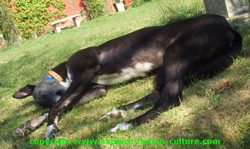 Cath and Mike's greyhound Nero saw no point in exercise!
How different are Italian greyhound dogs from their big cousin the greyhound? In many ways the answer is - very. Our greyhound would probably eat a miniature greyhound for breakfast and would certainly not recognise the little one's high-stepping gait: a greyhound sees no point in stepping high and tends to lope - or if possible to sleep.
An average of 15" (38 centimetres) tall and weighing just 10 lbs (about 4.5 kilos), the difference between an average sized miniature greyhound and a whippet is something like 10 kilos (22 lbs); a large greyhound weighs in at about 34 kilos (77 lbs).
And while a grey's top speed at full stretch is about 45 miles per hour (when he can be bothered), a miniature greyhound will average something like 25 miles per hour. Still fast if you're trying to catch him.
As with their larger cousins, all that running and such thin legs may lead to health worries: broken legs can be a problem but otherwise, in spite of his fragile looks, the Italian greyhound tends to be a healthy dog. Apart from a danger of burning while lazing in the sun, that is.
Interesting facts about the miniature greyhound: personality
Small dogs tend to have large personalities, and of all Italian dog breeds this is most true of the miniature greyhound. Playful, lively, energetic, he can be a fast-moving dog when young and outside will run and run just for the fun of it.
Like the greyhound he will chase a ball, but sees no point in retrieving it - that's for you to do - and if there's a squirrel or a bird to chase instead, so much the better.
Inside, he loves nothing more than to jump on furniture and hurtle around a room from chair to table to bed in a kind of doggy assault course.
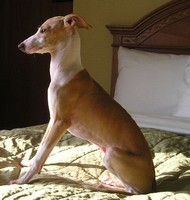 Miniature greyhounds love furniture
Without anything to chase indoors he will play with stuffed toys and, always curious - some would say nosey - he likes to be up high. If he can find a window ledge to sit on he will entertain himself for hours watching the world go by - and wanting to join in.
But on the other hand, the miniature greyhound is a creature of comfort. He hates the rain and will refuse to go for a walk in cold weather if he can get away with it. If there's a spare sofa he will make sure he fills it by stretching to his full length. He likes nothing more than to doze in the sun, waking from time to time to eat or be stroked.
And that is his greatest love of all: what the Italian greyhound wants most in the whole world is constant company. He hates to be left alone, loves to be with his person and will follow that person round like a shadow if allowed to.
When his person sits down, he will sit on top of him. When his person goes to sleep, he will want to snuggle under the covers. Unlike the Italian sheepdog, the miniature greyhound is a sociable, people-dog.
Could that cause you problems? Of course it could. If you want a dog who will sit quietly at your feet all day this is not the right dog for you. If you value your furniture and don't want it to be used as an obstacle course; if you don't like long walks; if you don't like being pestered for attention; if you don't want a dog who will steal food at any given opportunity - find another breed.
#Ad
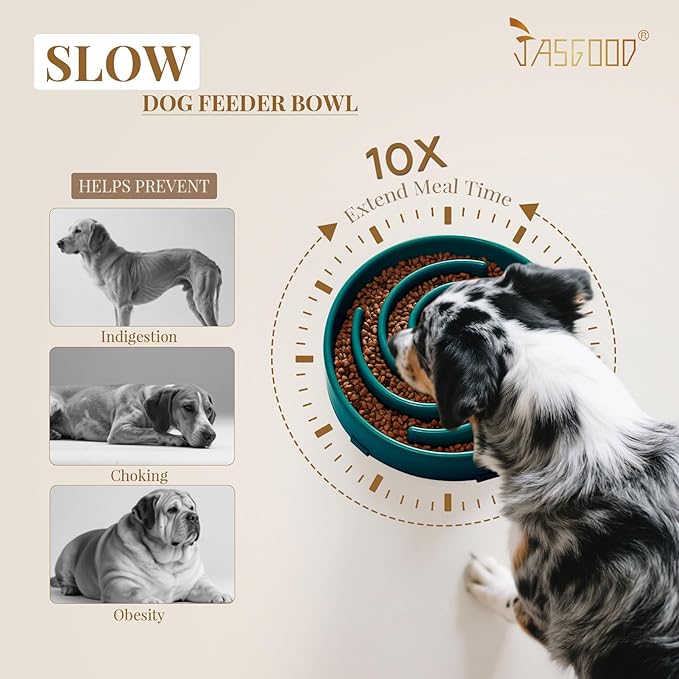
Dog Anti-Gulping Slow Feeding Bowl
Does your dog eat too quickly?! This Anti-Gulping Bowl helps your pet to slow down when eating and makes meals take longer to consume. This helps prevent choking, dangerous after-meal bloating, and improves digestion by eating at a healthy pace.
Read more and purchase on this link.
Interesting animal facts: how to tame this lion-dog?
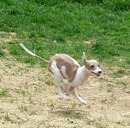 The mini greyhound loves to run
Training and exercise for dogs are always important, but vital for the miniature greyhound. His huge eyes will melt your heart; he will use all his wiles to get exactly what he wants but an untrained, indulged dog is quite capable of becoming a tyrant and before you know it will be ruling your family all on his own.
This is one of the hardest dog breeds to house train; stubborn and manipulative, he needs great consistency from a strong owner whom he respects as leader of the pack.
Training can be a battle of wills. Opinionated, wilful and very intelligent the miniature, exactly like his big cousin the greyhound, will not obey you if he sees no point - particularly if he is fixed on some object he thinks is much more interesting.
But without training and exercise your miniature Italian greyhound can become timid, destructive and difficult.
The miniature greyhound: a dog breed selector
So, the big question : is the Italian greyhound dog right for you and your family? Here's how you can decide whether this is the breed to suit your lifestyle.
How much does a miniature greyhound cost?
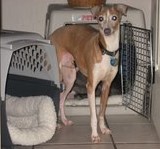 "Please take me home!"
More popular in some countries than others, the miniature greyhound will cost accordingly. Expect to pay at least £500 (565 euros; US$735) for a dog, more for a bitch and be prepared to wait if you want a pup. Cath wrote this page a while ago - 2025 prices will be higher!
Alternatively have a look at miniature Italian greyhound dog rescue centres. They exist all over the world and will have adult dogs to re-home which can be easier to manage than pups.
Reasons for re-homing are usually to do with family crisis rather than behavioural problems, but can be related to this breed's high energy levels and problems in house-training. You need to ask for details about the dog you choose.
However you get your dog, remember that the initial cost is only a part of it. It is not unusual for a miniature greyhound to live for fifteen years and you need to add on the costs of food and vet's bills.
Although generally a healthy breed, the miniature greyhound, like his big cousin the greyhound, can be prone to gum disease which can be very expensive to treat, and also to epilepsy and eye disease in some breed lines. This needs to be checked with the breeder or rescue centre before you buy.
Does the miniature greyhound make a good family pet?
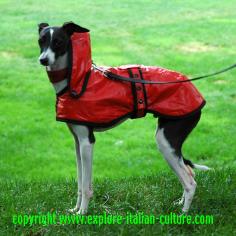 Not a rough and tumble dog, the Italian greyhound hates the rain
A lot depends on the family. This is not a rough and tumble breed and generally won't mix well with noisy youngsters who will want to pull him around and are naturally clumsy anyway. So families with toddlers should think about another type of dog.
The miniature greyhound is generally fine if carefully introduced into a household with cats but isn't a good dog to have if there are other, larger dogs in the family. He doesn't think of himself as a small dog, but trying to play and compete with larger animals can lead to injury.
But for families of adults with older children from the age of about ten, or adults without children, the miniature greyhound could be an ideal companion - particularly if the family likes walks. He does prefer to be looked on as another family member rather than a dog and needs lots of attention: if you don't give it, he will demand it from you.
With careful, consistent training, lots of exercise, a flexible approach and a sense of humour, the miniature Italian greyhound can make an ideal family pet.
A city dog?
In some ways this breed is very compatible with apartment living. He is small, doesn't bark a lot, doesn't smell, has a very short coat which doesn't shed much, and with a lot of patience can be trained to use a litter-box.
But a caged miniature greyhound is an unhappy miniature greyhound. Although classed as a toy breed this is a very active dog who needs space to gallop.
Remember too that he hates being alone and will suffer from separation anxiety, so if you are going to leave him in your apartment for any length of time he is likely to become bored and destructive.
What about a dog for the country?
Yes, in terms of loving wide open spaces and long country walks. But remember that the miniature greyhound, although a toy dog for show purposes, is also a member of the sight hound (gazehound) group.
Just as with the large greyhounds some - though not all - miniatures have a high prey instinct and, once 'locked on' to a smaller animal nothing will distract them.
Remember too that this breed is very short-haired, thin skinned and has a low body weight with virtually no fat. They feel the cold, hate the wet and cannot be left outside.
And as a show dog?
The miniature greyhound is recognised as a breed to be shown in most countries. Numbers are growing; in the UK between 2001 and 2008 Kennel Club registered numbers rose from eighty-nine to one hundred and fifty seven.
And given his size and speed he would be very good in the agility class - if only he could be persuaded to obey instructions.
And finally - some interesting animal facts
- the miniature greyhound was popular with royalty long before the Corgi!
 Catherine the Great with her Italian greyhound
Forget the Corgi - the miniature Italian greyhound got there first.
Their elegance and high-stepping walk has made the Italian greyhound popular with royalty for a long time - even Queen Victoria had one. But the Russian royal family went one better and made sure their pooch would be remembered for all time.
In St Petersburg, Russia, there is now an annual holiday held on 27 July in honour of the Russian Empress Catherine's Italian Greyhound "Zemira". On that day in the grounds of the Grand Peterhof Palace, against the magnificent backdrop of the Grand Cascade - one of the most astonishing fountains in the world - a contest is held to find the most beautiful hound. The dog and his owner are then presented with an award in the Throne Room of the palace itself.
A setting only proper for this elegant and most popular of dog breeds.
Like to know more about the miniature greyhound?
Here are a couple of must-have books
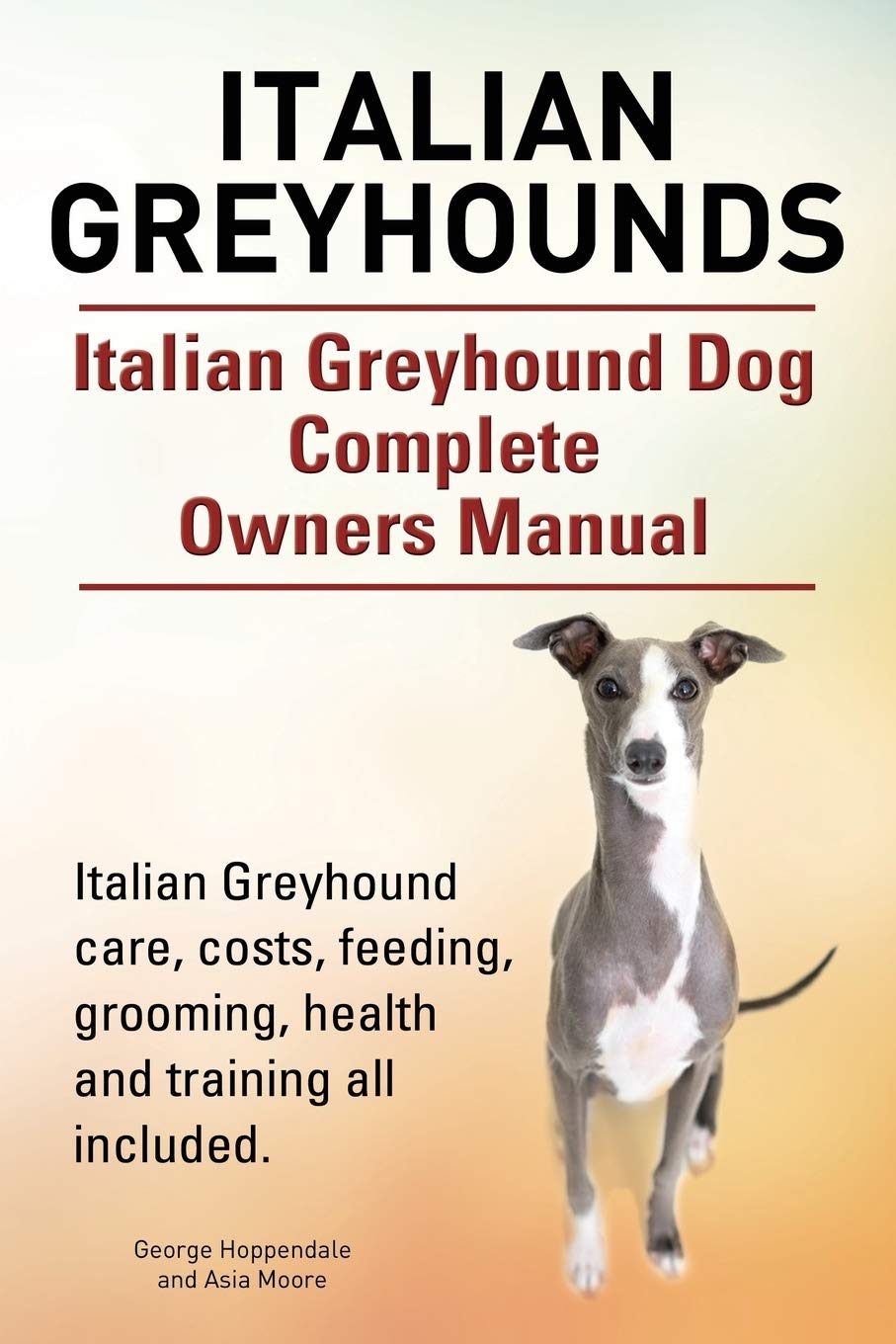
Learn everything there is to know, including little known facts and secrets and how to care for every aspect of the Italian Greyhound's life.
This manual contains all the information you need, from birth to the Rainbow Bridge, including transitioning through house breaking, care, feeding, training and end of life, so that you can make a well-informed decision about whether or not the Italian Greyhound is the breed for you.
Read more and purchase on this link.

This Guide includes practical tips, tricks, and insights to help a new (or veteran) Italian Greyhound owner. Authors Rene Lighty and Candace Darnforth used interviews with EIGHT top Italian Greyhound breeders to create an in-depth look at what it REALLY takes to successfully live with, raise, and care for an Italian Greyhound.
Read more and purchase on this link.
Remember to look at our page all about Italian dog breeds for more information!
Have a look at our overview page about animals and Italian culture
Check availability and current special offers on Tours in Italy now!!

Click here or the banner below to read more about tours in Italy!
Save Money And Precious Time With Our Italian Cheat Sheets - Etiquette, and Insider Tips For Rome.
CLICK HERE TO VISIT OUR
ITALIAN ETIQUETTE CHEAT SHEET INFORMATION PAGE.
CLICK HERE TO DISCOVER A HIDDEN SIDE OF ROME -
Tips From An Insider!
Recent Articles


-
May Day Italy 2026! Does Italy close down on May 1st? Find Out Here!
May 15, 26 11:20 AM
 May Day in Italy: transport, restaurants and banks: what's open, what's not - and how to celebrate May Day Italy.
 -
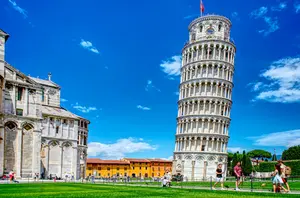
What To See In Pisa, Italy: The Essentials Plus Some Local Tips!
May 10, 26 04:09 AM
 If you're wondering what to see in Pisa, Italy, here's a useful and detailed guide about the essential sights to see, what to do, and some insider tips!
 -
Tips For Going To Rome From An Insider - The Rome Cheat Sheet
May 02, 26 02:40 PM
 Discover the Eternal City most tourists never see. Tips for going to Rome - discover the back streets, the hidden gems, the budget secrets, and insider tricks.


You can book a Pompeii Small Group Tour with an Archaeologist through our trusted partner Viator.