Colored pasta : how to make different types of pasta.

Italian pastas aren’t restricted to yellow.
Find out how to make your own colored pasta, and have a look at some of our delicious authentic Italian sauces to go with it.
Enjoy making different coloured pasta - it's easy!
Italy being a pasta-loving nation, you won’t be surprised to know there are hundreds of different types of pasta - not all of them the basic yellow egg colour.
On this page we’ll show you how to make different colored pasta - but with a word of warning first.
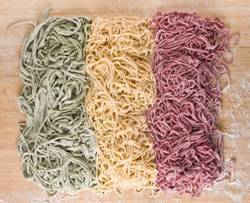
Don’t forget that, however entertaining and decorative colored pasta is, it should complement, not rival, the sauce - which is always the central attraction of any pasta dish.
So don’t overdo the colour or flavourings and always try to match the pasta with the sauce you’re proposing to serve it with.
For all these recipes you will need to refer to our page about how to make homemade pasta.
The quantities specified here refer to the amounts used in that recipe.
How to make green colored pasta
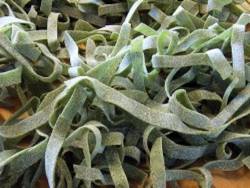
Use either spinach or broccoli to give a light green color to all types of pasta. Nettles are another favourite source in Italy and can be safely used as an excellent source of minerals and vitamin C. Prepare exactly the same way as for spinach, using only the leaves.
Use one less egg in these recipes, as both spinach and broccoli add a lot of moisture.
Spinach
- Wash and shred about 200 grammes (8 ounces / 0.75 cup) fresh spinach; sprinkle with a pinch of salt and heat it in a pan without adding any extra water. Cover the pan with a lid and leave on a low heat.
- Let it cook for about five minutes, then cool and squeeze as much water as you can out of it using kitchen towel.
- Using a hand blender, combine the spinach with the eggs, and once it is blended, just carry on with the rest of the recipe.
- Make sure you keep your hands and the surface you’re kneading the dough on very well floured, and if you find the dough is too wet or sticky when you have kneaded it for several minutes just add flour a little at a time, kneading it in between.
Broccoli
- Use 60 grammes (2 ounces / 0.25 cup) of broccoli, finely chopped, steamed, drained and dried as much as possible.
- As with spinach, blend with the eggs and carry on with the rest of the recipe.
- Use green pasta for any dish : it works particularly well with cheese sauces and in lasagne. In Italy it’s often combined with yellow pasta in the same dish.
How to make red colored pasta
This can be achieved by using tomato paste, peppers or beetroot (beets).
Tomato
- Using a hand blender mix three tablespoons of tomato paste with the eggs and, once combined, continue with the basic recipe.
Peppers
- Remove the stem and seeds from one red bell pepper, cut it into small pieces and purée using a blender. Combine with the eggs and continue.
Chilli peppers
- These will add
a spicy bite to pasta, as well as a red / orange colour. Use
sparingly!
- Finely chop 1 or 2 (depending on strength) chilli peppers, add to the eggs in a bowl and blend together. Carry on with the recipe.
- If you prefer, you can use one or two teaspoons of dried chilli pepper flakes.
Beets (beetroot)
- Cook 110 grammes (4ounces / 0.5 cup) of beetroot. Strain well, purée with a hand blender, add to the eggs, blend together and continue.
- Red pasta can taste a little acidic, particularly the tomato pasta, and needs to be balanced with a rich, creamy sauce.
How to make black colored pasta
Black Italian pastas can be a bit unsettling the first time you see them! But they’re delicious, and go perfectly with a creamy, fish based sauce.

The color in this recipe comes from squid ink which is now available in packets from good delicatessens.
However, if you know a fishmonger try there first - fresh squid ink is a different and really delicious taste.
- Use 4 teaspoons of squid ink (dry or fresh) and add it to the eggs with a hand blender. If using fresh ink, add one less egg for this pasta to balance the extra liquid.
How to use herbs to flavour Italian pastas
A single herb, or a combination of two or more, can add a delicious flavour to any type of pasta and has the added benefit of creating an interesting speckled effect.
Garlic Pasta
- Crush 2 to 3 garlic cloves and use a
hand blender to combine with the eggs before working the eggs into the flour.
Green herbs
- For all other herbs, use about 60 grammes (2 ounces / 0.25 cup), wash and pat dry, chop finely, and blend with the eggs.
- Herbs that work well include sage, thyme, parsley, chives, tarragon, basil, and oregano.
- Fresh herbs vary in strength depending on the season so you need to gauge the amount you use - and no two batches will ever taste quite the same!
- Because you’re adding herbs for flavour rather than colour, the best sauce to use with this pasta is simple butter melted over it.
Want something scrumptious to go with your homemade pasta? Have a look at our recipe for Italian meatballs.
Have a look at our recipe for Pizza Margherita - if you love Italian, eat this!
More delicious authentic Italian pasta recipes

Recent articles.